Persistence of Folk Beliefs and Practices in Care of the Dying
“The poor and old are cared for now just as in days of yore
When friars at their Abbey kept for all an open door
And old friends who come to fish on island studded Mask
Throw care away as day by day in beauteous peace they bask
The Europeans as can be seen we welcome as our own
And the yanks all love to linger in this grand old Mayo town”
Excerpt from “This grand old Mayo town” by Bríd Ní Ghamhnáin (Staunton 2018)
As I slowly drag the digital magnifier across the handwritten manuscript from 1938 and read out the text, one fragment at a time, my mother types out the contents. The tedious process of transcribing a manuscript on customs related to dying in the west of Ireland creates an almost trance-like space, which inspired by the archival material, elicits a collective memorial of personal experiences with family vigils for the dying. With amusement, we recall a deathbed request by my great grandmother for unofficial communion and the uproar created when my second cousin returned from the store with white grape juice to represent the blood of Christ (Keeler 2023). Humour, storytelling and the gathering of family characterised these family vigils, which were an unspoken custom in my childhood that deteriorated as the elders, the glue of the family, passed and external obligations took priority. We mourn our traditions along with our dead, but perhaps vestiges of these customs persist in a different form.
Introduction
In recent generations, there has been a shift in both attitudes and practices surrounding the care of the dying in Ireland and other Western industrialised nations. Transition from life to death or afterlife is a rite of passage performed by humans through socially constructed rituals. Customs of standing vigil, storytelling, reliance on guides and co-creating an atmosphere of comfort have maintained a place in Irish deathbed care over many generations. Though folk beliefs and practices respond to dynamic interwoven social and institutional forces, a dying person and individuals close to them continue to co-create liminality in facilitation of a rite of passage for both the expiring person and those standing vigil. This paper engages autoethnographical observations, primary archival folklore sources and secondary analyses to explore the collective conception of liminal spaces for the reciprocal care of the dying and their observers.
Methodology
As a healer and aspiring folklorist in the Mid-Atlantic/Appalachian region of the United States, the author has observed a lot of interest in Irish rites of passage among the Irish diaspora. With a particular interest in end-of-life support, they engaged with the National Folklore Collection, duchás.ie and a large corpus of secondary sources to find accounts of care for the dying in Ireland and to determine if there were instances of death midwifery. Although, the handy-woman or bean feasa[1] may engage in this role, it was primarily a communal process. The author chose a primary source that was available on duchás.ie for reliable access and ease of transcription and they supplemented with secondary sources, which rely heavily on archival material. Transcription of the primary manuscript in collaboration with the author’s mother elicited autoethnographical material, which led to observing shifts in their own family practices and an awareness of socio-economic pressures, contributing to these changes. Scholarship on shifts in attitudes about death and dying in Ireland mirror their autoethnographical experiences. When analysed alongside a comparison of historical and contemporary accounts of care of the dying in Ireland, a story of both transformation and persistence emerges.
Changes in Attitudes
Doctor of social science, John A. Weafer, has compiled research on Irish attitudes towards death and dying. His data show that although Irish people are statistically likely to die of natural causes and, due to longer lifespans, have a greater likelihood of living with chronic illness or partial disability for extended periods, discussions about death have become taboo (Weafer 2016). He attributes this inconsistency to “fac[ing] death without spiritual comfort or confidence in the afterlife as Ireland’s socio-religious landscape deteriorates and Ireland increasingly becomes a more secular society” (Weafer 2016, 275). Folklorist Patricia Lysaght recognises the same trends in Ireland and other Western industrialised countries. She identifies capitalistic norms, which label non-productive people[2] as “social and economic burdens” and reinforce avoidance attitudes around death and dying (Lysaght 1995, 27). The dying are frequently compartmentalised in institutional settings or under the care of the immediate family, outside of societal view. Engaging with archival material from the National Folklore Collection, Lysaght establishes an overview of past[3] attitudes towards death and dying in Ireland. She emphasises views on death as a natural part of life and the convention of family and community-based care, including standing vigil, familiarity with signs of death, spiritual care and creating a liminal atmosphere of support. Extended family and neighbours would step away from economic and domestic responsibilities to provide community support for the dying, a “flow of on-going life which slows its pace in communion with the weakened body” (Donnelly 2002, 4). This act exemplifies the recognition of death as a part of life and not something to be avoided. Lysaght highlights the expectation of dying at home, surrounded by loved ones and receiving religious consolation as signs of a ‘good death’ (1995). Weafer found that these values persist, although interest in religious support is declining. Another aspect that has waned is the transmission of duchás or ancestral knowledge. One informant lamented that because death is not talked about, younger generations do not understand it as natural or know how to deal with it (Donnelly 2002). This loss of knowledge transmission has contributed to both shifts in attitudes and modifications in folk practices related to the care of the dying.
Literature Review
Care of the Dying
Previous scholarship on folklore associated with the care of the dying has demonstrated a large corpus of collected material and the persistence of some beliefs and practices, either objectively or thematically (Donnelly 1999, 2002; Kellehear 2013). This continuance is observed in both home care and palliative care settings, where cultural competence is recognised and appreciated by the dying and their friends and family, as they cooperate with professional caregivers to establish liminal spaces of reciprocal care (Connolly 2016; Donnelly et al. 2006; Larkin 1998; MacConville 2016; Watson 2016).
Rites of Passage
van Gennep identifies three stages in rites of passage – “preliminal rites (rites of separation), liminal rites (rites of transition), and postliminal rites (rites of incorporation)” (1999, 102). Upon passing through these stages, which may or may not always be clearly delineated, participants shift from one social or magico-religious role to another. This transitional process is intimately tied to care of the dying and immediately deceased as they pass from life to death. Building on van Gennep’s work, Turner takes a closer look at the three stages with an emphasis on liminality and the experience of the “liminal persona” as a being of indeterminate nature – “neither living nor dead” (1967, 95-97). Liminality is marked by a sense of being out of time and on the threshold of two different states –
being neither this nor that. According to Turner, groups engaging in ceremonial rites of passage and rituals involving liminal states exist in “a ‘moment in and out of time,’ and in and out of secular social structure,” which” creates a sense of belonging or communitas (1969, 96). These characteristics of liminality are present in the deathbed atmosphere created by those standing vigil with the dying.
Archival Accounts of Care of the Dying
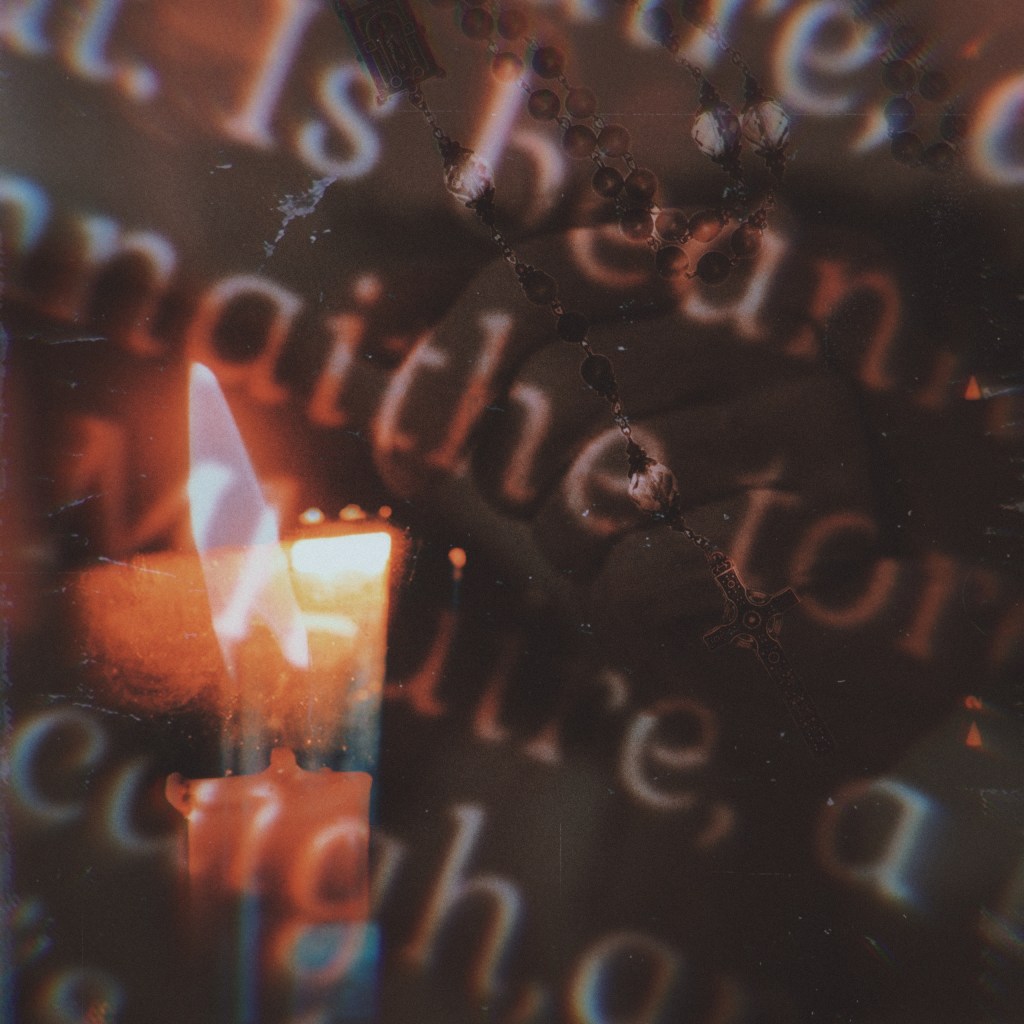
After searching the duchás.ie, the digitised archive of the National Folklore Collection, for material relating to care of the dying, CBÉ 0549 was chosen for analysis. Engagement with this text and ephemera related to its collector, Bríd Ní Ghamhnáin, situates the deathbed folk beliefs and practices of previous generations within time and place and provides a basis of comparison for contemporary rituals. Ní Ghamhnáin’s archival material was collected in 1938, in Killadoon, County Sligo. After documenting folklore concerning death omens, she outlines the deathbed customs, which stem from interwoven religious and folk beliefs. When it was likely that the ill person would die, the priest was sent for. Ní Ghamhnáin records a “double motive in sending for the priest, namely to prepare the person’s soul for its last journey, and also an old belief exists, that a sick person has a better chance of getting well if he is anointed” (CBÉ 0549: 302). Caregivers prepare the sick room for the priest’s rituals by cleaning and providing an altar cloth, two lit candles, flowers and a crucifix. Ní Ghamhnáin discusses the ability of family and community caregivers to recognise signs of impending death and describes deathbed vigils by “neighbours and hearth relatives,” who recite the rosary and place a blessed candle in the hand of the dying until the moment of death (CBÉ 0549: 306). She illustrates folk beliefs around enabling the soul’s journey from the body by opening windows and clearing doorways. She also mentions protective measures against contagion magic through avoidance of the moment of death by certain individuals[4] and proper disposal of clothing, linens and corpse washings after death (CBÉ 0549).
Although men took part in deathbed vigils, caregiving was primarily a female task. The National Folklore Collection had no full-time female collectors and there is a dearth of information regarding details of traditionally female roles. A fruitful questionnaire on death customs, to be discussed below, was collected in 1976, but part-time collector, Bríd Ní Ghamhnáin’s manuscripts provide a particularly detailed look at death customs in the west of Ireland (Donnelly 1999). A County Sligo resident, Ní Ghamhnáin collected over 2000 manuscript pages in Counties Sligo, Mayo and Waterford. She was passionate about local history and lore, loved in the community and well appreciated by archivist, Seán Ó Súilleabháin, who praised her documentation of bread making, saying, “Ní dóigh liom go bhféadfadh éinne ach bean an t-eolas san ar an arán a chur síos chomh cruinn – níor casadh fós orm in aon chóipleabhar tuarascáil chomh maith leis. Molaim go hard tú, aBhríd, dá bharr go léir[5]” (Irish Independent 1959; Mayo News 2009; Uí Ógáin 2014).
In 1999, palliative care doctor Sinead Donnelly employed both the National Folklore Collection and semi-structured interviews with elders in the west of Ireland to determine how ancestral wisdom might be applied to contemporary palliative care. She combined the information from the death customs questionnaire mentioned above with phenomenological experiences of her interview informants to identify emerging themes – sacredness of the moment of death, knowledge of end-of-life care, acceptance of death as a natural part of life and interjection of humour (Donnelly 1999, 2002). This corpus of material, along with Ní Ghamhnáin’s manuscript and Lysaght’s review of intergenerational attitudes, provide insight into Irish deathbed customs of previous generations, which contain hallmarks of rites of passage.
Persistence of Liminality in Irish Deathbed Rituals
Preliminal and postliminal stages can be interpreted at varying points in the socially constructed rites of passage surrounding the transition from life to death in Ireland; however, the liminal stage particularly pertains to co-created deathbed environments and the non-hierarchical sense of togetherness felt by vigil participants. According to Lysaght, this “situation of communitas, clearly involved group support of the dying individual” and “for the survivors by allowing for and enabling the expression of grief” (Lysaght 1995, 29). Although contemporary care for the dying tends to involve only immediate family, potentially with less religious practice and more often in institutional settings, liminality is shaped by the persistence of the ancestral folk practices of standing vigil, storytelling, reliance on guides and co-creating an atmosphere of comfort.
Standing Vigil
Public health sociologist Dr Allan Kellehear, argues that contemporary vigils for the dying are continuations of traditional wake behaviours. Although they parallel wakes, they also reflect community deathbed vigils from previous generations, which represented a pre-death wake of sorts (2013). When a person was dying, “people would sit up day and night, often for several weeks” (Donnelly 1999, 60). This vigil tradition persists among many immediate family units, often with the assistance of professional caregivers. The very act, removes participants from their occupational roles and places them in a container outside of time and hierarchy, where they engage in a reciprocal exchange of care with the dying. They stand as witness[6] and provide physical and emotional care, while receiving solace for their grief in return. This consolation comes from both the patient’s gratitude and a sense of “self-reward” for their value to the dying (Kellehear 2013, 120). The performance, which historically served to maintain community resilience, provides the same function in the preservation of smaller components of society, but in its current form reinforces the fragmented nature of community and the taboo of public grief.
Storytelling
Archival accounts of deathbed vigils recollect “conversation[s]…held with in hearing of the sick person, praising [their] attributes and good deeds, giving them courage, a sense of worthiness and strength” (Donnelly 1999, 59). Kellehear discusses the commonality of reminiscences exchanged with the dying (2013). In more intimate groups than in the past, the author’s diasporic family continues to engage in this practice in both home and hospital settings. The stories tend to be interspersed with humour, a paradox also observed by Donnelly, who views it as a valued contrast to the sadness being shared (2006). This storytelling behaviour continues after death, at wakes and funerals, as it “keeps the deceased alive in narrative during grief and prepares a place for [them] in local collective memory” (Cashman 2006, 20).
Reliance on Guides
Archival sources show that Irish lay people, particularly elders, exhibited familiarity with signs of imminent death (CBÉ 549; Donnelly 1999). They also knew to take care of the dying person’s mouth[7] and would sometimes use poitín[8] to subdue pain (Donnelly 1999). Lysaght tells us that “an essential part of deathbed protocol was that every effort should be made to alleviate as much as possible any physical or psychological suffering on the part of the dying person” (1995, 32). If no neighbour or hearth relative had appropriate knowledge, a local handy-woman could be brought in to direct the scene” (Lysaght 1995). This wise woman would also take care of washing the body directly after death (CBÉ 549). Contemporarily, this function of guidance is often filled by home care or palliative care workers. Although Kellehear, cites the potential for tension between families and professional caregivers as they strive to “‘re-claim’ both the space and control over the dying person and [their] needs,” (2013, 119) accounts of palliative care nurses in West Ireland exhibit a cultural competence, which extends from their membership in the local community and allows them to seamlessly create space for bedside rituals (Larkin 1998).
Co-Creating an Atmosphere of Comfort
Lysaght paints a picture of the deathbed scene – “As death drew near, the atmosphere surrounding the dying person was one of intense persona, supportive and devotional caring, resulting from the family’s and community’s continual attention to the dying person’s physical and spiritual needs” (1999, 39). This atmosphere was co-created by the dying and vigil participants, who would recite the Rosary, a trance-inducing prayer, which was familiar to the dying person and facilitated participation by large groups of people (CBÉ 549; Donnelly 1999, 2002). This prayer, though less common, is still utilised by practicing Catholics along with the sprinkling of holy water around the deathbed to dispel spirits and/or bless the dying person (CBÉ 549; Donnelly et al. 2006). Signs of grief were discouraged in past generations due to the belief that strong emotions could upset the dying and prolong death (CBÉ 549). Contemporary death scenes involve a range of emotions, but physical closeness and touching through hand-holding[9] and more intimate forms persists as the dying and their families engage in reciprocal care and openness. This raw vulnerability, partnered with the rhythm of the breath of the dying, creates a scene that exists outside of everyday time and place and provides an atmosphere of comfort and transition (Donnelly et al. 2006). In one account elicited by Donnelly, a daughter describes the moment of death as “something suspended,” where she was only aware of herself and her father (Donnelly et al. 2006, 356). In the past, this liminal state was extended by stopping the clocks at the moment of death and re-starting them only after the burial (CBÉ 549, Lysaght 1995). Though modified, customs of standing vigil, storytelling, reliance on guides and co-creating an atmosphere of comfort indicate the persistence of intergenerational folk beliefs and practices.
Conclusion
Folklorist, Dr Ray Cashman, states, “[i]n order to register death [and] express grief…[w]e need customs. Faced with death, we who remain spend time together, and how we pass that time is a form of communication, a rhetoric enacted” (2006, 9). In the face of major societal changes, family/community groups maintain habitual liminal spaces necessary for the rite of passage of transitioning from life to death. They co-create intermediary environments through the implementation of persistent and modified folk practices and beliefs. These observations have several implications for further study in the areas of folklore transmission, co-creation of ritual spaces and cultural competence in end-of-life care.
[1] Wise-woman
[2] i.e., the ill or dying
[3] covering about a hundred years up to 1976
[4] those “liable to take whatever disease the person died from” (CBÉ 0549: 307)
[5] “I believe that only a woman could write as accurate an account about bread – I have yet to see as fine an account in any copybook. You deserve the highest praise, Bridie, for it all.”
[6] The dying person is also witnessing their own death (Kellehear 2013)
[7] This imperative has been validated by contemporary palliative care (Donnelly 1999).
[8] A traditional Irish home-distilled alcohol
[9] Common in archival accounts
Bibliography
The Mayo News. 2009. “Bridie Mulloy,” October 28. https://www.ww.w.varaia.com/obituaries/8008-bridie-mulloy.
Cashman, Ray. 2006. “Dying the Good Death: Wake and Funeral Customs in County Tyrone.” New Hibernia Review / Iris Éireannach Nua 10 (2): 9–25.
Connolly, Michael. 2016. “Palliative care and the embrace of wholeness.” In Death and the Irish: A Miscellany, edited by Salvador Ryan, 270-272. Dublin: Wordwell.
Donnelly, Sinéad. 1999. “Folklore Associated with Dying in the West of Ireland.” Palliative Medicine 13 (1): 57–62. https://doi.org/10.1191/026921699675359029.
Donnelly, Sinéad. 2002. “‘The Nature Is All There’—Cultural Influences on Care of the Dying.” Progress in Palliative Care 10 (2): 61–64. https://doi.org/10.1080/09699260.2002.11746618.
Donnelly, Sinéad. M., N. Michael, and C. Donnelly. 2006. “Experience of the Moment of Death at Home.” Mortality 11 (4): 352–67. https://doi.org/10.1080/13576270600945410.
Irish Independent. 1959. “Courses and Comments,” October 3.
Keeler, Pamela. (mother, transcriber), in discussion with the author. October 2023.
Kellehear, Allan. 2013. “Vigils for the Dying: Origin and Functions of a Persistent Tradition.” Illness, Crisis & Loss 21 (2): 109–24. https://doi.org/10.2190/IL.21.2.c.
Larkin, Philip J. 1998. “The Lived Experience of Irish Palliative Care Nurses.” International Journal of Palliative Nursing 4 (3): 120–26. https://doi.org/10.12968/ijpn.1998.4.3.9114.
Lysaght, Patricia. 1995. “Visible Death: Attitudes to the Dying in Ireland.” Merveilles & Contes 9 (1): 27–60.
MacConville, Una. 2016. “Compassionate companionship of the dead: deathbed visions.” In Death and the Irish: A Miscellany, edited by Salvador Ryan, 245-247. Dublin: Wordwell.
National Folklore Collection at UCD, CBÉ 0549: 295-326. Killadoon, County Sligo. Collector: Bríd Ní Ghamhnáin, 1938.
Staunton, Averil. 2018. “Mrs Bridie Mulloy: Our Irish Women – Ballinrobe, Co. Mayo: People: Historical Ballinrobe.” Historical Ballinrobe. July 31. http://www.historicalballinrobe.com/page/our_irish_women_-_ballinrobe_co_mayo.
Turner, Victor. 1967. “Betwixt and between: the liminal period in rites de passage.” In Forest of Symbols: Aspects of the Ndembu Ritual, 93-111. Ithaca: Cornell University Press.
Turner, Victor. 1969. “Liminality and Communitas.” In The Ritual Process: Structure and Anti-Structure, 94-113, 125-130. Chicago: Aldine Publishing. Abridged.
Uí Ógáin, Ríonach. 2014. “Beyond Full-Time Collecting: The Contribution of One Part-Time Collector to the National Folklore Collection.” In Folklore & Modern Irish Writing, edited by Anne Markey and Anne O’Conner, 33-47. Sallins: Irish Academic Press. Accessed October 18, 2023. ProQuest Ebook Central.
van Gennep, Arnold. 1999. “The Rites of Passage.” In International Folkloristics: Classic Contributions by the Founders of Folklore, edited by Alan Dundes, 99-108. New York: Rowman & Littlefield Publishers Inc.
Watson, Max. 2016. “An Irish volunteer (‘If’ in a hospice).” In Death and the Irish: A Miscellany, edited by Salvador Ryan, 251-253. Dublin: Wordwell.
Weafer, John A. 2016. “What you don’t know: Irish attitudes towards death and dying.” In Death and the Irish: A Miscellany, edited by Salvador Ryan, 273-275. Dublin: Wordwell.
 Bridging Appalachia
Leave a comment