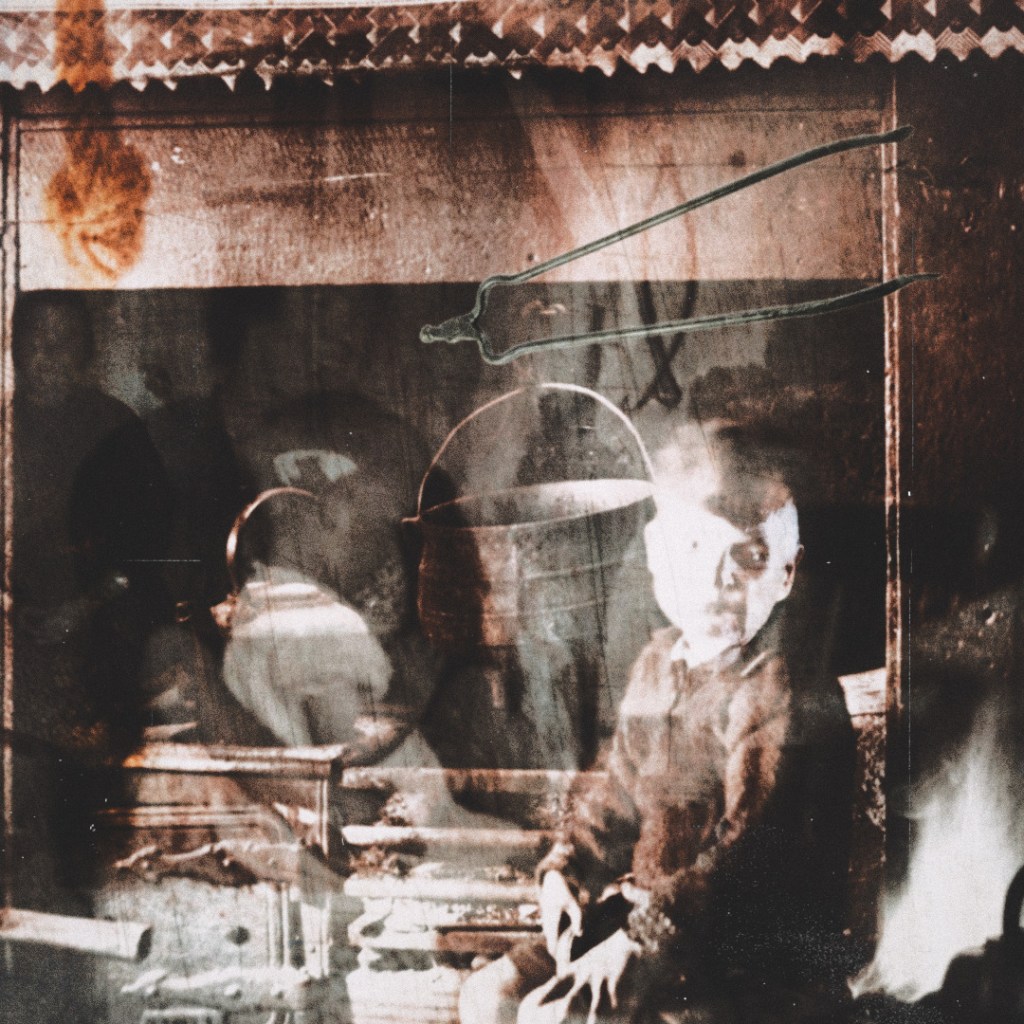
Changelings are fairy substitutes for human children or adults that have been abducted. They may function as a coping mechanism for rationalising neurodivergence, disability, high infant death rates or any behaviour which violates patriarchal social norms (Ballard, 2014; Eberly, 1988). Within the rites of passage structure, separation occurs when the loved one is abducted, unusual behaviour is observed or unexpected illness or death occur. The liminal stage is represented by the presence of a fairy changeling that must be tricked into revealing themself and returning the human that was taken. If one is successful in dislodging the changeling through trickery or torture, incorporation is achieved with the return of the missing person.
Changeling migratory legends are categorised as ML 5085. These tales provide warnings and strategies for retrieving human captives. The fairy changeling generally looks like a child, but has mature attributes and a sickly appearance (Mac Philib, 1991). The tales often involve a third party, such as a traveling tailor, that observes the changeling smoking, playing music or performing some other unlikely task. This person may use trickery to reveal the changeling by doing something completely ridiculous or announcing that the closest fairy fort is on fire. In the first case, the fairy will exclaim that although they are incredibly old, they have never seen something so odd and in the latter, they will rush out of the house to save their family and belongings. Alternatively, the person will recommend that the parent force the changeling out by throwing them on the fire or into a river (Mac Philib, 1991). Unfortunately, torture of an alleged changeling could result in harm or death to a human, who has been mistaken for one. In the case of Bridget Cleary, who was tortured and killed by her husband and family, it could be argued that a sense of communitas within the liminal space of Bridget’s perceived transformation, caused her relatives to act in ways that violate norms.
Ballard, L.M. (2014) ‘A Singular Changeling?’, Folk Life, 52(2), pp. 137–151. Available at: https://doi.org/10.1179/0430877814Z.00000000028.
Eberly, S.S. (1988) ‘Fairies and the Folklore of Disability: Changelings, Hybrids and the Solitary Fairy’, Folklore, 99(1), pp. 58–77.
Mac Philib, S. (1991) ‘The Changeling (ML 5058) Irish Versions of a Migratory Legend in Their International Context’, Béaloideas, 59, pp. 121–131. Available at: https://doi.org/10.2307/20522381.
 Bridging Appalachia
Leave a comment