
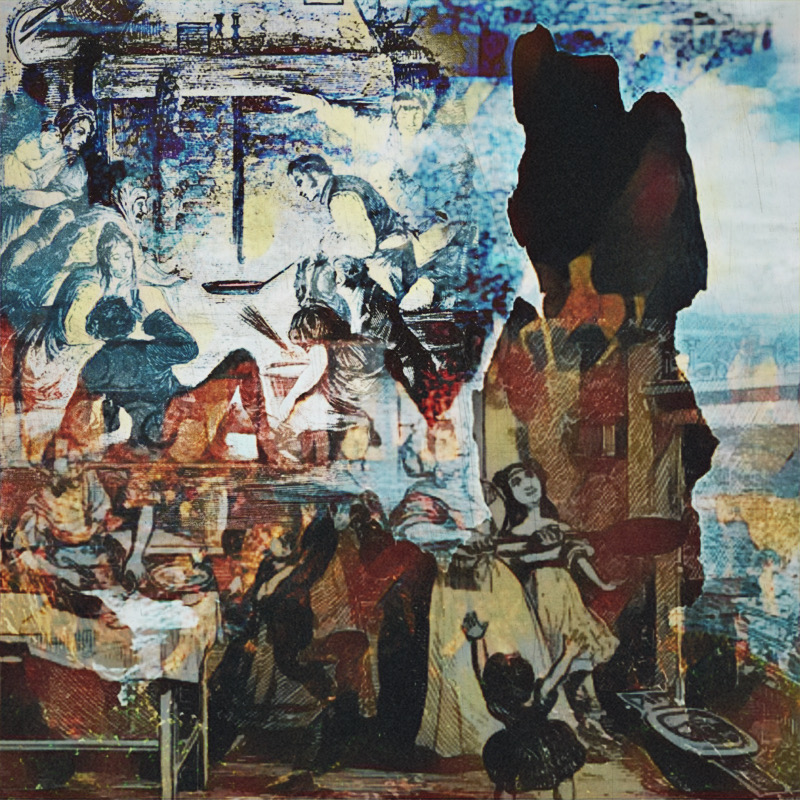
In preparation for the abstinence of Lent, families and neighbours gathered at the hearth to feast on meat and dairy products. Like on Oíche Shamhna, young people of marriageable age participated in divination rites to determine their luck in matrimony for the following year. There was a common practice of flipping pancakes over the fire to determine ones’ luck. Both communitas and the first successful pancake were shared among the guests, who hoped to find a ring inside their slice. This was also the time for most weddings in rural Ireland, as they were traditionally and canonically disallowed during Lent (Danaher, 1972b). In concern for the continuance of society, unmarried people were considered to have disregarded their social duty and were doomed to remain in the liminal status of children for another year, regardless of age (Danaher, 1972a).
For those who missed the cutoff for the year, there was a last-minute chance for matrimony by travelling to Sceilg Mhichíl, where Easter was celebrated a week later than the mainland. This idea contributed to the penitential custom of going to the Skelligs. Unmarried persons were condemned to walk barefoot on the Skellig rocks and return with loads of bogwood equivalent to their years of single status (Danaher, 1972a). Several other penal customs could be found between Shrove Tuesday and the first Sunday of Lent. In some areas humorous poets composed printed verses, known as Skellig lists, which farcically matched the remaining unmarried people (Cross, 1999; Danaher, 1972a). Other pranks included late night serenades, marking unmarried people with chalk and pelting them with salt or ashes (Danaher, 1972a). This humiliation may have resulted in communitas among penitents, but these practices died out post-famine, when getting married became less feasible.
Cross, E. (1999) ‘Chapter 13’, in The Tailor and Ansty, Cork, Ireland: Mercier Press, pp. 126–133.
Danaher, K. (1972a) ‘Chalk Sunday’, in The year in Ireland. Cork (4 Bridge St., Cork): Mercier Press, pp. 47–52.
Danaher, K. (1972b) ‘Shrove Tuesday’, in The year in Ireland. Cork (4 Bridge St., Cork): Mercier Press, pp. 39–46.
 Bridging Appalachia
Leave a comment