TW: vague references to domestic abuse, sexual assault, infant death, death in childbirth and torture.
Fairy belief is a complex and varied cosmology involving supernatural entities of assorted types living within or in a parallel realm to the human world. Interaction with these beings can have unpredictable results, but they are generally regarded with caution. Legends, beliefs and practices related to fairies and other uncanny personalities are used to rationalise trauma and uncertainty by explaining events and behaviours that occur outside of expected or sanctioned norms. In this way, they act as coping mechanisms or cautionary tales to divert blame, avoid conflict, maintain status quo and provide comfort. These Otherworld beings are scapegoats for approaching difficult aspects of Irish society, including topics that are otherwise considered unspeakable.
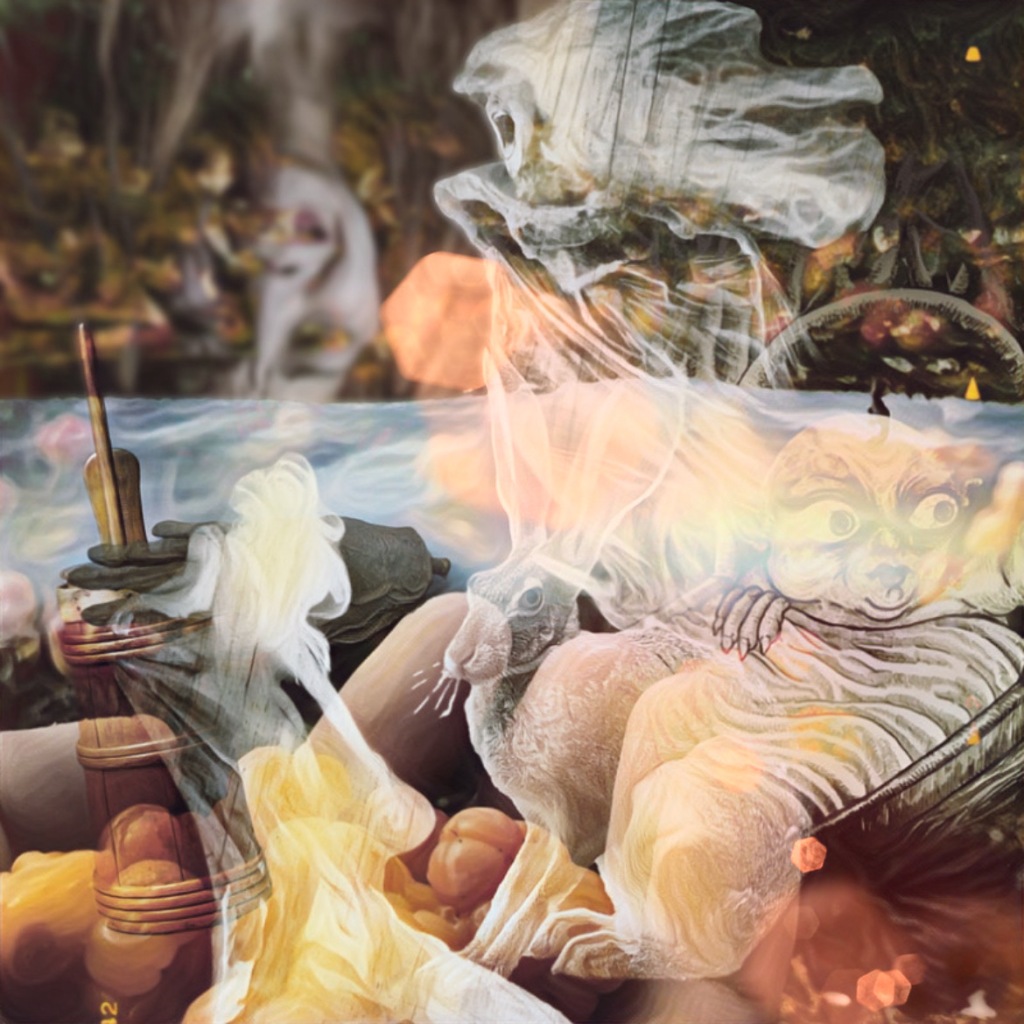
Irish rural society in the 17th to 20th centuries involved economic uncertainty based on anxieties about subsistence and cash agriculture with unpredictable results. Concerns about failed harvests, sick cattle or unsuccessful butter were paramount and their loss was easy to blame on potentially envious neighbours with a particular emphasis on old women with no support system, who were deemed outside of society. Agrarians were suspicious of both the evil eye – intentionally or unintentionally used to blink butter, animals, machinery or children – and magic through spells, charms or transformations for profit-stealing and other malicious intents. Tales of butter witches are plentiful and often implicate socially deviant women as shapeshifters, who suck the butter-making properties from the teats of neighbour’s cows. Profit-stealing could also be achieved by churning someone’s milk with a hand of glory, a smoke-dried hand from a corpse, or by disregarding protective mechanisms, like briefly helping with churning on a visitation or avoiding borrowing domestic items on Bealtaine.
Fairy interference was also common in the domestic realm and economic tensions were increased due to gendered divisions of labour, which saw men performing seasonal work in the fields and women executing continuous domestic work of childcare, homemaking and dairy production. This imbalance in income-creation challenged patriarchal power dynamics and placed women in mistrusted positions, particularly as they would marry into a husband’s household and remain a perpetual outsider. Diverting blame for domestic failures to supernatural beings functioned to maintain the appearance of social harmony and structure, yet labelling a married woman a witch or changeling could also be a sanctioned form of rejection from the family unit. This practice followed to a tragic conclusion in the case of Bridget Cleary, whose father and husband tortured her to death with force-feeding and fire as they attempted to expose her as a changeling and in the hopes of getting the true Bridget back. It is not possible to truly know the minds of the relatives involved, but Bridget was known to be entrepreneurial, independent and suffering from illness.
Tales of the banshee can simultaneously emphasise attitudes about a woman’s place in the home, while providing potential coded messages about female desires for freedom. Deviant behaviour in general is aired out via folk belief and practice. The bean chaointe, a human keening woman closely aligned with the banshee, took advantage of the liminal space of wakes and funerals to call out domestic abuse by the deceased through lament poetry, which guides the community through the threshold of their grief. This practice was eventually stamped out by the church and changes in societal expectations. Recognition of sexual assault is also implicit in tales of the banshee, providing justification for avoidance of a dishevelled woman alone at night, an interaction that would both prove the existence of aberrant behaviour in the community and possibly denote involvement. Fairy narratives among Irish emigrants in Newfoundland demonstrate the dangers of berry-picking by women on the fringes of town and warn against individualism. Some victims ‘taken away by fairies’ returned with torn clothing, memory loss and injuries. These indicators could infer assault, infidelity or premarital sex. The tales could be a protective mechanism for the preservation of reputation – safety from shame or embarrassment associated with deviant behaviour, regardless of personal fault. This method only goes so far, however, as fairy victims are often othered for life and the term ‘away with the fairies’ was used as a catch all phrase for mental illness, physical or mental disabilities, or behaviour outside of social norms, all topics that were not openly discussed or necessarily understood in pathologized terms.
Death of children and birthing mothers was common during the height of fairy belief. Tales of fairy changelings replacing human children were comforting justifications for loss or inexplicable behaviour. Fairies were believed to be incapable of having their own offspring and required stolen children, nursemaids and midwives for kidnapped women in labour. One changeling story involves a small child that suddenly stops developing, appears as a tiny elder and refuses to eat. The child’s mother leaves him alone with a travelling tailor who witnesses unexplainable acts. The changeling child speaks like a rude adult, dances and plays the fiddle. Upon the mother’s return, the tailor advises that she claim to have seen a rath on fire nearby. Hearing this, the changeling jumps up and runs out of the house to save his burning home and the true child is returned. This mild method for exposing changelings can be contrasted with the treatment of Bridget Cleary, whose torturous tests are also recommended by lore.
There were many protective measures for babies, children and new mothers, who were vulnerable to fairy interference by way of their liminal statuses. Iron tongs could be placed across the cradle of an unattended newborn. Coveted male children were dressed as girls to confuse the ‘good people’ and recent mothers were kept inside until the churching ceremony, which restored their position in society. Cillíní are unofficial burial grounds for unbaptised children and adults who were not deemed worthy of Christian burial. These folk religious sites provided comfort for grieving family members as tales surrounding them told of potential entry to heaven by baptism after death by a travelling priest or water pouring off the roof of a ruined church.
Fairy belief and practice has been utilised to manage difficult or taboo subjects in Irish society that are not openly discussed. Through cautionary lore and protective practices, societally endorsed behaviours are reinforced and deviant behaviours excused or eliminated. Fairy faith is also a form of comfort in the face of uncertainty, oppression and potential conflict. Although these functions can be recognised in Otherworld belief and practice, they do not encompass the full scope of Irish supernatural worldview and also do not disqualify the potential less symbolic appreciation for the ‘good people’ as ancestors and part of the landscape.
Bibliography
Christiansen, Reidar Th. 1971. “Some Notes on the Fairies and the Fairy Faith.” Béaloideas 39/41 (Journal Article): 95–111. https://doi.org/10.2307/20521348.
Jenkins, Richard. 1997. “Witches and Fairies: Supernatural Aggression and Deviance Among the Irish Peasantry.” In The Good People: New Fairylore Essays, edited by Peter Narvaéz, 302–30. Lexington: University Press of Kentucky.
Kimpton, Bettina N. 1993. “‘Blow the House down’: Coding, the Banshee, and Woman’s Place.” Proceedings of the Harvard Celtic Colloquium 13 (Journal Article): 39–48.
Narvaéz, Peter. 1997. “Newfoundland Berry Pickers ‘In the Fairies’: Maintaining Spatial, Temporal, and Moral Boundaries Through Legendry.” In The Good People: New Fairylore Essays, edited by Peter Narvaéz, 336–61. Lexington: University Press of Kentucky.
Ní Dhuibhne, D. 1993. “‘The Old Woman as Hare’: Structure and Meaning in an Irish Legend.” Folklore (London) 104 (1–2): 77–85. https://doi.org/10.1080/0015587X.1993.9715855.
 Bridging Appalachia
Leave a comment