Holy wells are water sources associated with past or present religious devotion. They may be simple springs or have complex landscapes, including a shelter, a rag tree, an adjacent mass rock, and/or various other natural or man-made features, which serve as stations for ritual interaction. These features and the wells themselves are material culture that embodies crystallised belief and encourages intergenerational ritual practice. Some wells have pre-Christian origins, as evidenced by iron age votive offerings found at various sites and oral narratives, which hold collective memory of pre-Christian devotions. The value of these ritual actions is validated through this generational knowledge while alternately co-opted or prohibited by the official Catholic church, becoming layered with Christian elements as practitioners negotiate their relationships with folk and official religion. Although there are over 3000 holy wells in Ireland, many no longer draw pilgrims for regular devotion. Irish holy wells perform multiple functions for communities through the relationship between belief and practice.
Ó Danachair refers to three reasons pilgrims visit holy wells – to ask for something, to show gratitude for something or to perform a penance. By the 17th century, these ambitions were generally accomplished by doing the rounds, location-specific rituals that may include prayers, deiseal movement to various stations, drinking from the well, blessing with or taking away water and leaving an offering as a form of sacrifice or transference of sin or illness. This practice allows for collaboration with the landscape, which may include pre-Christian elements, like ogham stones and Christian legendary markers, such as a rock with a saint’s knee prints. Well visits can occur at any time, but are most common on special days, such as Good Friday, Garland Sunday (Lughnasa) or pattern days specific to the patron saint of a particular well.
In their peak, pattern days began with rounds, sometimes including pain or humiliation in addition to the long rituals, and concluded with secular entertainments of drinking, dancing and sports or faction fighting. It was believed that any sins incurred during this community rite of passage were negated within the liminal space of the well. The rowdiness of these events eventually led to church condemnation and self-policing that put an end to the secular portion of the practice, but this carnivalesque atmosphere provided matchmaking functions and reinforced social cohesion when behaviours returned to normal.
Folk beliefs about holy wells combine embodied memory of pre-Christian practice with popular Catholicism and are best demonstrated by the legends that surround them. Saint legends include narratives of saints baptising pre-Christian wells or performing miracles to produce new ones. Common tropes involve conquering a beast that is preventing use of the well, purification of previously toxic water, the addition of healing properties and physical landmarks, which prove the saint’s presence. For example, Saint Simon’s well in Tipperary has a rock nearby with an imprint of the saint’s knees, where he knelt to pray. These stories often co-opt the pre-existing virtues of a well while integrating Christian symbology and authority, but they allow practitioners to continue intergenerational visitations while reconciling identities related to land-based folk practices and Catholic doctrine.
Priest legends may also be tied to holy wells. Narratives to justify healing properties may begin with a holy man blessing a well on his travels. The well’s miracles are then discovered when a blind man washes his face and gains the ability to see. Mass rocks are frequently located near holy wells. These clandestine sites for open air masses were imperative in penal times of anti-Catholic oppression, but priests would be murdered if discovered performing mass. Many tales refer to healing properties of wells that are sanctified by the martyrdom of one of these priests. Guides for protecting holy wells are also found in legend. Taking shared items from a well or using it inappropriately can lead to ill luck, as can cutting of a sacred tree. Rag trees at holy wells contain votive offerings from parishioners and are frequently Hawthorn or Blackthorn trees, known to be associated with the ‘good people.’ Tales function as warnings to respect these trees and reinforce the folk religious connection with the landscape and the Otherworld. A common tale involves visions of fire, which become real if warnings are ignored. Misuse or damage of a well will result in negative consequences. If someone inadvertently washes their clothes in a holy well, it may dry up and reappear somewhere else. Saint Simon’s well, mentioned above, is believed to have dried up for this reason. In more malicious circumstances, narrative penalties are much more severe. In one tale-type, a Protestant landlord has a well destroyed to prevent trespass and supress Catholic practice. He is cursed with an insatiable thirst until he restores the well. In other versions his herd dies off to pay for his misdeed.
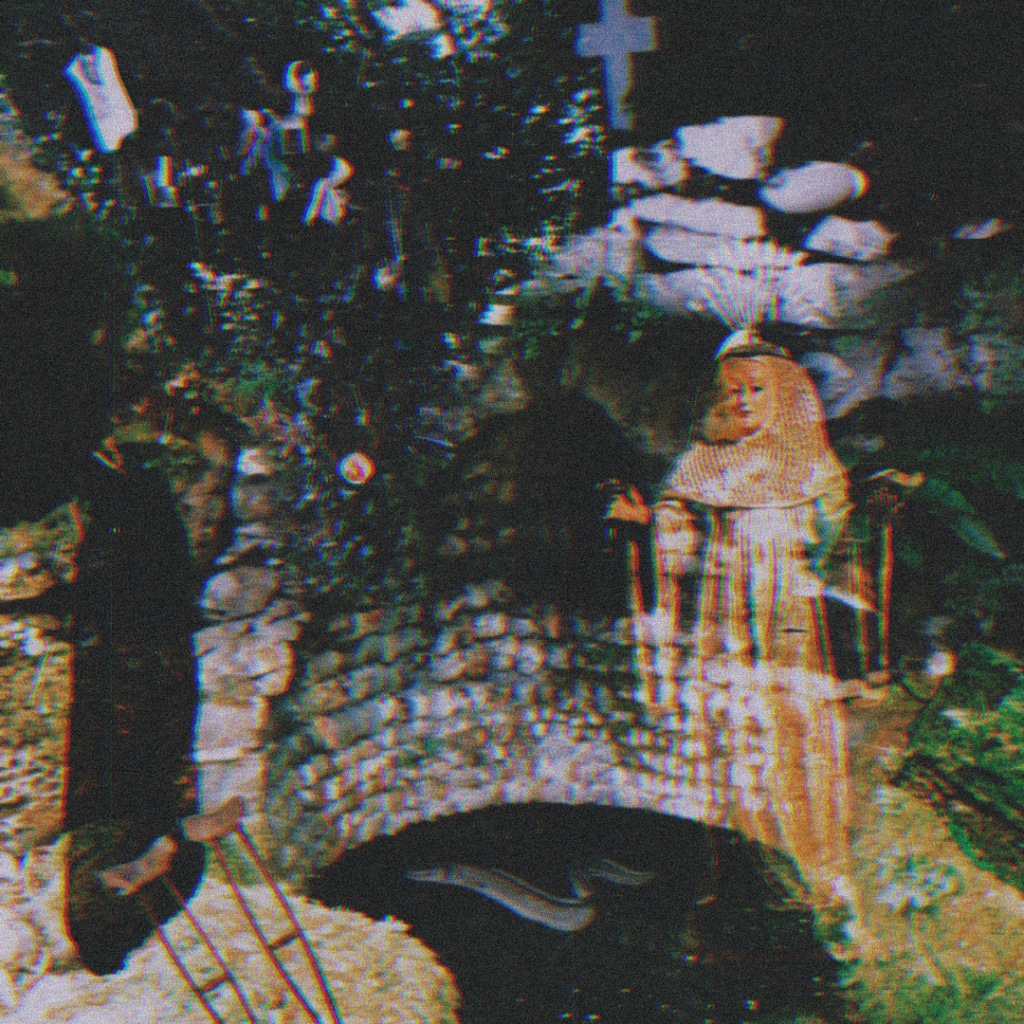
Supernatural phenomena are told of holy wells. Saints may appear to bless or heal parishioners. Spirits may glow like a lighthouse to guide boats away from shore or warnings may be issued like the cautionary fire mentioned in relation to cutting well trees. This same fiery warning is deployed for those attempting to dig for treasure thought to be buried by wells. Healing powers of the holy wells are touted by legend as well. They may mention cures for people that couldn’t be healed by doctors or other wells, disabled people with miraculous recoveries that leave their crutches behind as an offering or emigrants and sailors saved from death at sea by carrying water talismans from the wells. Fish or eels are considered good omens if seen in a holy well. A legend of Saint Gobnait’s well in Ballyvourney ensures a positive healing outcome with the presence of a good omen. A young devout woman with a terminal illness goes to the well for rounds. She knows she will be healed when she spots a large white fish. Many holy wells have legends that combine these themes.
These beliefs are maintained through ritual practice in interaction with the landscape, which allows practitioners to connect with ancestors and engage material culture for embodied experience of layered symbolism and identity. Functions of healing and folk religious expression are readily identified, but they are layered with more nuanced meanings resulting from complex histories. Holy wells legitimise uncanonised Irish folk saints through ritualised devotion. They have sometimes provided cillíní, burial sites for unbaptised children and others who were prohibited from consecrated ground. They stand as sites of resistance in the face of both colonial and religious oppression and allow for reconciliation of complex identities, shaped by negotiations with changing social and political landscapes. It is through belief and practice, tied to place and tangible culture, that these seemingly conflicting expressions are held in consonance.
Bibliography
McCormick, Finbar. 2009. “Struell Wells: Pagan Past and Christian Present.” Journal of the Royal Society of Antiquaries of Ireland 139 (Journal Article): 45–62.
National Folklore Collection (henceforth NFC) S 342: 258. Collector: Mary Creed, Maghcromtha Scoil, County Cork, 1937. Teacher: Pádraig Ó Deasmhumhna.
NFC S 532: 096-097. Collector: James Hogan, Buirgheas Uí Chatháin Scoil, County Tipperary, 1937. Teacher: Séamus Gáirnéar.
O’Brien, Suzanne J. Crawford. 2008. “Well, Water, Rock: Holy Wells, Mass Rocks and Reconciling Identity in the Republic of Ireland.” Material Religion 4 (3): 326–48. https://doi.org/10.2752/175183408X376683.
Ó Danachair, Caoimhín. 1959. “Holy Well Legends in Ireland.” SAGA OCH SED, 35-43S.
O’Sullivan, Muiris, and Liam Downey. 2006. “Holy Wells.” Archaeology Ireland 20 (1): 35–37.
Ray, Celeste. 2015. “Paying the Rounds at Ireland’s Holy Wells.” Anthropos 110 (2): 415–32. https://doi.org/10.5771/0257-9774-2015-2-415.
 Bridging Appalachia
Leave a comment