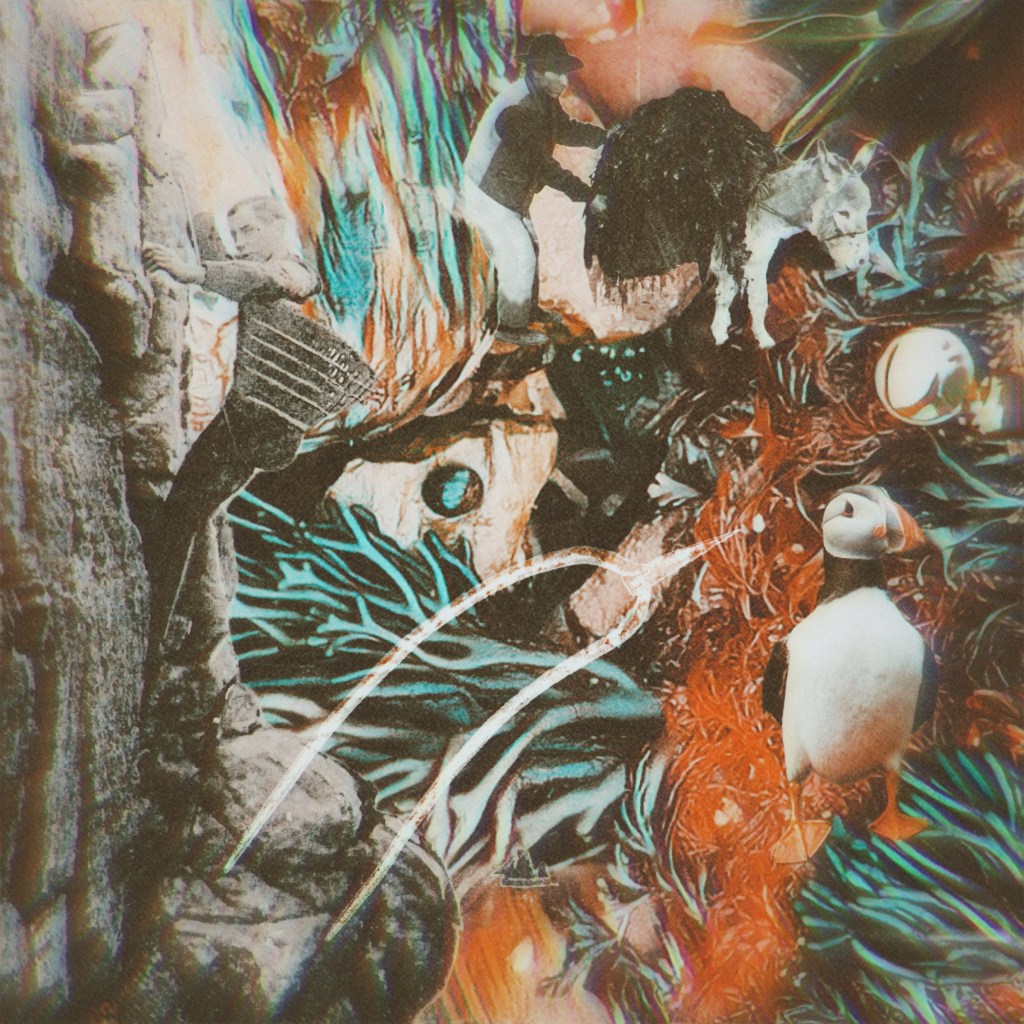
Seaweed harvesting and seabird fowling were significant economic and food provision strategies along the coasts and small islands of Ireland and Scotland into the 20th century, which have been disrupted for various reasons. Coastal farmers relied primarily on the sea for survival due to limited arable land, which is supplemented with nutrient rich seaweed manure and silt. Close cooperation with daily and seasonal cycles dictated agricultural practices, festivals and material culture. Low tides enabled women and children to hand harvest seaweed for food among divided wrackbeds, which were assigned to each household and dispersed to provide species variety. In these harsh environments, this Rundale system created tensions that led to fights and legal challenges, but successful implementation relied on community agreements and relationships to the landscape, which are reflected in full-moon, low-tide Easter and harvest festivals (Evans 1957; Campbell 2021). Technologies for seaweed harvest are informed by local knowledge of seaweed types and location-specific practices. Innovative transportation methods developed to accommodate the conveyance of large amounts of seaweed for fertilizer or industrial use. Climín feamainne or seaweed bundles are floated on oars as men are harvesting in deeper areas. Boats may also be used before transferring to human or donkey packs to move across land and drift seaweed was raked from the shore into baskets (Campbell 2021; O’Neill 1970).
Coastal farmers, surviving on ‘milk, bread, potatoes and fish,’ were dependent on seasonal seaweeds and seabird products for nutritional variation (Lysaght 2001b, 136). Food preparation and preservation methods reflected the regional and seasonal availability of seaweed species, which accommodated nutritional, medicinal and preferential needs. Seaweeds were often dried for long term use with wind, salt and sun (Lysaght 2001a). Seabird fowling was a hazardous undertaking, performed by men with the use of boats and region/species-specific methods of snaring birds and climbing down cliffs to collect eggs. This practice shapes portable foodways during hunts and seasonal food traditions for the preparation of bird flesh and eggs. At one time feathers were coveted commodities as well (Lysaght 2001b).
In St Kilda of the Outer Hebrides, where the environment was particularly harsh, sea-bird fowling was survival-dependent rather than supplemental and vulnerable community-members were prioritised (Baldwin 2012). Climate change and commercial harvesting have contributed to a dangerous reduction in the number of seabirds, but intergenerational traditions are partially upheld. There is a reduced autumn harvest of young gannet in Sula Sgèir that demonstrates the tensions between preserving material culture and adjusting to environmental concerns stemming from global forces (Day 2011; Lysaght 2001b). Soap and gelatine industries historically depended on hand harvesters for production, providing livelihoods beyond subsistence without destruction to the natural environment; however, seaweed demand for pharmacology and boutique food sources has invited government-sanctioned international interests, which are forcing out communal methods of land-sharing and hand-harvesting, through mechanical extraction methods that decimate coastal ecosystems. Seaweed supplementation for cattle has been shown to vastly reduce methane emissions, indicating that restoration of intergenerational knowledge systems could contribute to contemporary resiliency and sustainability (Siggins 2017).
Bibliography
Baldwin, John R. 2012. “Harvesting Seabirds and Their Eggs on the Irish Sea Islands (Part 4: Environmental and Cultural Influences).” Folk Life 50 (1): 51–71. https://doi.org/10.1179/0430877812Z.0000000004.
Ballard, Linda M. 1991. “Is It Traditional.” Irish Arts Review Yearbook, no. Journal Article, 223–28.
Campbell, Noel. 2021. “Seaweed Harvesting – the Tools of the Trade.” Our Irish Heritage (blog). Accessed 9 May, 2024. https://www.ouririshheritage.org/content/new-contributions/seaweed-harvesting-the-tools-of-the-trade.
Day, Mike, dir. 2011. Watch The Guga Hunters of Ness Online | Vimeo On Demand on Vimeo. BBC. https://vimeo.com/ondemand/gugahunters.
Evans, E. Estyn. 2000. “Wrack and Wreck.” In Irish Folk Ways, 218–32. Newton Abbott; New York; Dover.
Glassie, Henry. 1999. Material Culture. Bloomington, Ind: Indiana University Press.
Lysaght, Patricia and University College Dublin Press. 2001a. “Food‐Provision Strategies on the Great Blasket Island: Sea‐ bird Fowling.” In Northern lights: following folklore in north-western Europe : aistí in adhnó do Bho Almqvist = essays in honour of Bo Almquist, edited by Séamas Ó Catháin, 333–63. Dublin: University College Dublin Press.
Lysaght, Patricia and University College Dublin Press. 2001b. “Food-provision Strategies on the Great Blasket Island: Strand and Shore.” In Northern lights: following folklore in north-western Europe : aistí in adhnó do Bho Almqvist = essays in honour of Bo Almquist, edited by Séamas Ó Catháin, 127–40. Dublin: University College Dublin Press.
O’Neill, Timothy P. 1970. “Some Irish Techniques of Collecting Seaweed.” Folk Life 8 (1): 13–19. https://doi.org/10.1179/043087770798241454.
Siggins, Lorna. 2017. “What’s Happening with Our Seaweed and Why Should We Care?” The Irish Times. Accessed 16 May, 2017. https://www.irishtimes.com/life-and-style/people/what-s-happening-with-our-seaweed-and-why-should-we-care-1.3160359.
 Bridging Appalachia
Leave a comment