“Trauma, illness and grief create frightening forests of pain, with unfamiliar roads…listening to stories suggests myriad pathways out of dark forests” (Sunwolf 2005, 3).
In the Western perspective, medicine is defined as practices or preparations, which aid in the prevention or treatment of dis-ease (Kingston 2017). The nature of dis-ease in many traditional societies is attributed to disharmony with nature and is viewed in a communal rather than individual context (Mehl-Madrona 2007). Stories are (co-)created narratives of metaphorical or perceived events, which are communicated for the purpose of entertainment, identity/memory formation, education and unification (Csordas 1999; Lindahl 2018; Mehl-Madrona 2007; Sunwolf 2005). As communicative rituals, stories aid in the transmission of ancestral knowledge, community healing/protection/regulation and making sense of the world through connection with the landscape. Medicinal praxes vary across time and culture, as do beliefs about the nature of healing and dis-ease, but storytelling is a universal practice (Wilce 2000). Story as medicine utilizes this commonality to co-create shared realities that facilitate healing, as defined by the person or community being healed.
The human brain is hardwired for reality co-creation through interactions between the hemispheres of the brain – narrative on the left and emotion on the right – and the function of mirror neurons, which induce feelings of embodied experience when stories are viewed or heard. In the case of hearing a story, the listener employs their imagination to collaborate with the storyteller in constructing new existences (Lindahl 2018).
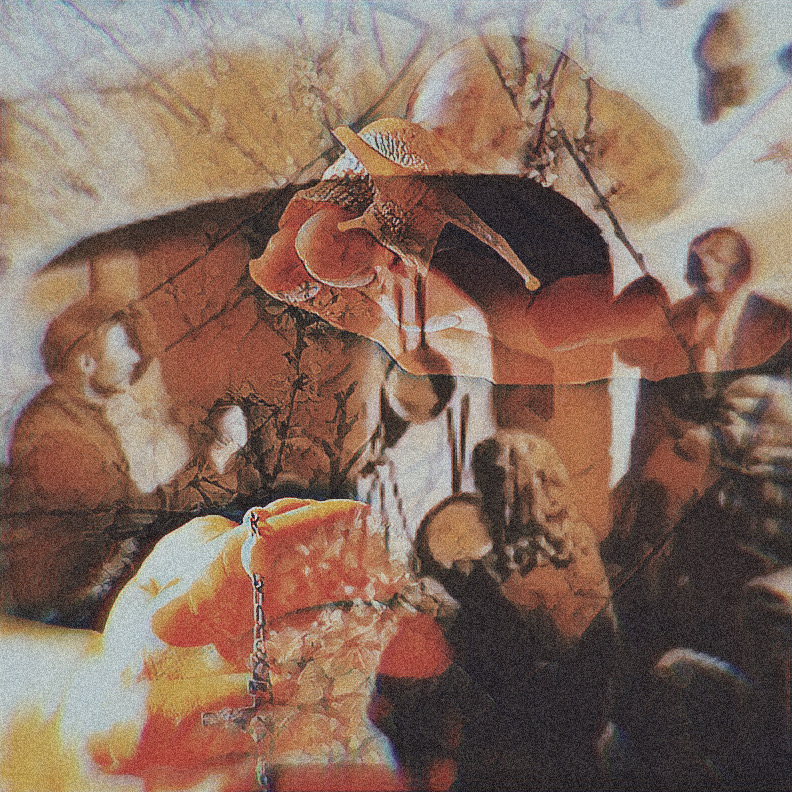
Folk healing, the medicine of the people, may employ a combination of material (plants, stones, animal products etc.) and/or magical elements, often through sympathetic or contagion magic[1] (Ní Fhloinn 2019). The magical component is ultimately a ritual prescription, which employs specific guidelines of time, manner and place to enact a cure (Hand 1971). Time may be indicated through the repetition of magical numbers or performance during certain moon phases, times of day or special events. Manner might be designated through instructions to travel deosil[2] or widdershins[3], to avoid food or speech, or to speak an incantation. Liminal spaces – crossroads, margins, or out of the way locations – are often specified as places for healing rituals, where discarded illnesses will not be picked back up through transference[4] (Hand 1971). The following two narratives illustrate magical prescriptions for the healing of warts in relationship with Blackthorn as a threshold space of sacrificial ceremony and snails as “intermediate agents of disposal” (Hand 1971, 142).
“The cure of the Black Snail.
If you find a Black Snail without being actually looking for it and rub it on the wart saying in the Name of the Father of the Son and of the Holy Ghost it is supposed to cure it in nine days if the snail is stuck on the thorn of a blackthorn and as the snail dies and withers away the wart will be seen to gradually disappear. This cure has been tried locally and has been successful. In one case it took the warts from a horse and in another case it cured the warts from the hands of Joseph Conlon of Lissakillen Glasson a boy in our class.”
NFC S 747: 29-30 – County Westmeath
“Warts:
They resorted to superstition here. They used to get a snail. The snail must be found by accident, otherwise it will [be] useless. They used to prick the snail three times with a blackthorn in the Sign of the Cross. This snail is to be used three nights one after the other. In the meantime if anyone else tried to cure warts with it both cures will fail.”
NFC S 820: 99 – County Offaly
These elements come together to tell a story, which creates an atmosphere of healing through performance, belief and ritual action (Rubenstein 1984). They enact accessible beliefs and practices, which provide a sense of control over uncertainty and vernacular solutions to illness in cooperation with the landscape.
One type of ritual folk curing, charming, is the performance of incantations[5] with the expectation of a specific outcome (Carney & Carney 1960; Halpern & Foley 1978; Tuomi 2019). In Ireland, these incantations tend to follow a conventional structure, which may include allusion, intention, invocation, termination and ritual actions. The allusions provide validity by referencing successful cures in Christian, Irish or Greater European mythology and the ritual actions reinforce the narratives through embodied experience; however, power is conveyed by verbal incantations through their symbolism and connection to larger stories in cultural memory (Carney & Carney 1960). These verbal indicators may be performed silently or aloud and may or may not be intelligible, but their inclusion communicates a story of healing as they are heard or observed. Words in the Irish language, whether or not it is known by the charmer or the subject, are considered especially effective, even outside of Ireland, and common incantations, such as the Lord’s Prayer, connect ancestral practices with contemporary spiritual beliefs (Carey 2019; Carney & Carney 1960). An account from the School’s Collection in the Irish Folklore Collection quotes a charmer from County Kerry after he is scolded by a priest for practicing charms – “I have cured this woman’s body now, and you can cure her soul and if I liked, I could stop the waters of the river Jordan of flowing” (NFC 408: 58-59). This statement silenced the priest’s admonitions by referring to the powerful Flum Jordan charm for blood-stopping. Its efficacy is reinforced by a historiola[6] about the baptism of Jesus by John the Baptist in the River Jordan. This micro-story infers that the flow of the river stopped during the act. The sympathetic connection of the river and the blood narrates the present-day cure, while linking with stories from the past. “To isolate charms from their ‘cultural matrix’ is to limit our understanding of them;” charmers are not going back to an idealised past, but are looking to ancestral knowledge to inform the present in a new context (Ní Fhloinn 2019, 134). Other types of charms may be staged for preventative medicine. Aishling na Maighdine, or the Virgin’s Dream, is a prophylactic charm against nightmares, which likely spread to Ireland from continental Europe pre-colonisation. The narrative involves Mary waking from a prophetic dream of the passion of Christ. Jesus validates her foretelling and advises speaking the charm three times to ensure salvation. Vernacular use of the charm inverts the narrative imagery of Mary’s nightmare to prevent bad dreams after triple recitation (McArdle 2019). On a larger scale, charms can be worked to manipulate authority and encourage communal behaviour.
Satire is a type of oral charm, which acts as a curse for the purpose of legal or societal regulation (Carey 2019; Kudenko 2019). Like poison plant medicine that heals through destruction, satire shames its target into acceptable behaviour and rebalances power dynamics to demand compliance from unfair leaders. In pre-Christian Europe, poets orfilid, had great power due to their ability to perform satire, a valued characteristic, which was superimposed upon Irish saints in hagiographies and heroes in sagas (Kudenko 2019). The Glám dícenn satire is a fatal curse documented in a Middle Irish metrical tract. It could be inflicted upon a corrupt king through the ritual words and actions of a group of filid. If the satire was just, the king would be swallowed by the earth in a literal judgement by the landscape. The same fate would be suffered by the poets, should their accusations be unfounded (Kudenko 2019). This system cultivates agency by imbuing performers with the sovereignty of the land and causing humiliation in view of the people as a whole.
“We cannot see an illness independent of the stories we tell about it. We cannot treat an illness without telling a story” (Mehl-Madrona 2007, 87).
Story or narrative medicine also exists in conjunction with allopathic medicine. Within contemporary medicine settings, storytelling and story-listening have been recognised to improve health outcomes and introduce coping strategies by enriching communication between doctor and patient, inducing a trance-like state and inspiring re-storying of a person’s relationship to wellness (Mattingly and Lawlor 2001; Sunwolf 2005). By improving listening, medical professionals can shift to “treating the story” – the illness as perceived by the patient (Mehl-Madrona 2007, 33). This cultural and interpersonal competence empowers the patient to navigate their own healing. Sociologist, A.W. Frank, refers to illness “as a call for stories,” which allows patients to re-create personal narratives to make sense of their past, present and future (Sunwolf 2005, 2). In Ireland, folk cures are recommended or sought out by conventional medical professionals when biomedicine fails or has no effective treatment (Nuttall 2019). This cultural validation stems from lived experience in an environment with a strong history of oral communication, folk healing and intimate relationship with the land. Irish oral tradition is perpetuated through meaning-making and vernacular practice as people strive to make sense of the world around them. Themes from institutional religion permeate oral tradition through familiarity and easy adaptation to vernacular community values. Cures based on supernatural folk beliefs are sometimes performed with institutional religious elements and alongside biomedical treatments for culturally competent solutions to dis-ease. This fusion of ideas mirrors the lived-experience and ancestral knowledge of the people who share these medicine stories and imprint their understandings on the local landscape as they co-create community identity. The relationship is reciprocated through crystallised collective memory and sites of healing, such as holy wells.
Although stories are confronted and enacted within the context of the current moment and the lived-experience of those interacting with them, they carry ancestral knowledge, which can supplement, guide and shape personal and collective values and actions. Prophylactic tales from previous generations reinforce societal values and help to prevent “unwanted outcomes” (Sunwolf 2005). These tales of warning can hold ancestral memory of geological time and cyclical weather events that would otherwise be forgotten. Understanding of these dangers can inform current generations of how and where to live to ensure survival (Mehl-Madrona 2007). Story-sharing as a rite of passage can directly inform health practices through normalisation of detection and prevention of dis-ease. For instance, Yakama women’s story circles presenting Pap tests “as an important part of becoming a woman” provide positive influence on young female Alaskan Native Americans (Sunwolf 2005, 4). Although reproductive healthcare has long been a taboo and legally proscribed subject in Ireland, “women did all that they could to control their reproductive health, to retain their bodily autonomy, and to avoid detection by authorities” (Delay 2019, 482). Informal networks of oral communication among women were responsible for knowledge of and access to abortion care. Other difficult subjects are tackled through folklore. Recognition of sexual assault is implicit in tales of the banshee, providing justification for avoidance of a dishevelled woman alone at night, an interaction that would both prove the existence of aberrant behaviour in the community and possibly denote involvement (Kimpton 1993). Fairy narratives among Irish emigrants in Newfoundland demonstrate the dangers of berry-picking by women on the fringes of town and warn against individualism. Some victims ‘taken away by fairies’ returned with torn clothing, memory loss and injuries (Narvaéz 1997). These indicators could infer assault, infidelity or premarital sex. The tales serve as a protective mechanism for the preservation of reputation – safety from shame or embarrassment associated with deviant behaviour, regardless of personal fault.
“Oral storytelling in traditional settings constitutes a kind of shared dreaming…shared narratives are to the society as dreams are to the individual” (Lindahl 2018, 225).
Collective memory and storytelling are essential to community healing, protection and regulation. In Ireland, tales of butter witches emphasised socially derived gender roles and the importance of dairy production to household survival. Irish rural society in the 17th to 20th centuries involved economic uncertainty based on anxieties about subsistence and cash agriculture with unpredictable results. Concerns about failed harvests, sick cattle or unsuccessful butter were paramount and their loss was easy to blame on potentially envious neighbours with a particular emphasis on old women with no support system, who were deemed outside of society. Agrarians were suspicious of both the evil eye – intentionally or unintentionally used to blink butter, animals, machinery or children – and magic – through spells, charms or transformations – for profit-stealing and other malicious intents (Lehane 2019; Ní Dhuibhne 1993). Sympathetic magic could be employed by stealing an object related to butter-making from a neighbour’s farm or simulating skimming the cream from milk through ritual action with skirts, briars, whitethorn branches, spancels or other tools (Lehane 2019).
Cautionary tales of butter witches were plentiful and often implicated socially deviant women as shapeshifters, who suck the butter-making properties from the teats of neighbour’s cows in the form of hares. Protective charms for butter production were defensive of the community economy as whole and protective mechanisms, like briefly helping with churning on a visitation or avoiding borrowing domestic items during the liminal period of Bealtaine, were utilised without question. Protective magic, including re-establishment of boundaries is particularly important at this time and butter churns could be fortified by placing implements with shielding properties on or around them. Salt, rowan, burning turf and iron tools were common. If a household found that they were unable to make butter from their milk, similar implements in combination with protective charms could return the butter and punish the thief. Fire and iron were believed to burn a butter witch, reversing her spell. A hot iron poker plunged into the churn is evocative of rape, a patriarchal theme common to butter-stealing stories, but it may also have a practical purpose, as butter will not come when milk is too cold (Lehane 2019; Ní Dhuibhne 1993). Depending on the storyteller, coding within butter witch tales can also be seen to celebrate a rejection of patriarchal gender roles and emulate pre-Christian sovereignty goddesses, such as the Cailleach, connecting butter, the fat of the land, to the natural environment.
“Stories tell us what we need to know to make sense of the world” through connection with the landscape (Mehl-Madrona 2007, 53). These narratives can incorporate earthly or Otherworldly beings, work in combination with natural elements or exist in/on the land itself. The butter witch tales discussed in the previous section commonly include transformations into a hare, which both recognises the witch’s connection to the natural world and mirrors the pre-Christian deity of the Cailleach. In Irish folklore and daily life, hares are regarded with either ambivalence or complete suspicion due to their associations with the Otherworld, the Cailleach and inappropriate female behaviour (Ní Dhuibhne 1993). Although they are sometimes used for soups and the treatment of respiratory ailments, the bloody flesh of hares is often not eaten. Their characteristics and behaviours are indicative of shape-shifting and other witch-like comportment. They are solitary animals with colour-changing coats and no permanent home. Foraging during the threshold times of dawn and dusk, these animals are quick to escape danger. When confronted, they fight in an anthropomorphic stance and the females are considered more aggressive and highly promiscuous. Due to their reflection of socially deviant female performance, hares are seen as harbingers of misfortune to any who encounter them (Lehane 2019). This embodiment of wild indigeneity and “female cosmic agency” connects the hare with the Cailleach (Lehane 2019, 196). The stories provide a sense of control and a natural explanation for perceived threats to heteronormative societal norms and gendered divisions of labour.
Many Otherworld beings perform this role through story. Fairies, sidhe or more cautiously the “good people” are beings of a capricious nature that are intimately tied to the Irish landscape. They can take many forms and are believed to comprise mythic ancestors, the more recent dead, fallen angels and other numinous entities. Their marks on the landscape are remembered by dindsenchas, name origins and legends that attach folk beliefs to place. Fairy belief is a complex and varied cosmology involving supernatural entities of assorted types living within or in a parallel realm to the human world (Christiansen 1971; Jenkins 1997). Interaction with these beings can have unpredictable results, but they are generally regarded with caution. Legends, beliefs and practices related to fairies and other uncanny personalities are used to rationalise trauma and uncertainty by explaining events and behaviours that occur outside of expected or sanctioned norms. In this way, they act as coping mechanisms or cautionary tales to divert blame, avoid conflict, maintain status quo and provide comfort. These Otherworld beings are scapegoats for approaching difficult aspects of Irish society, including topics that are otherwise considered unspeakable. Through cautionary lore and protective practices, societally endorsed behaviours are reinforced and deviant behaviours excused or eliminated (Narvaéz 1997). Fairy faith is also a form of comfort in the face of uncertainty, oppression and potential conflict. Although these functions can be recognised in Otherworld belief and practice, they do not encompass the full scope of Irish supernatural worldview and also do not disqualify the potential less symbolic appreciation for the ‘good people’ as ancestors and part of the landscape.
“[W]e feel connected to nature through ceremony” and ritual actions performed in relationship with natural elements, like holy wells, provide opportunities for storied healing (Mehl-Madrona 2007, 34). Ritual practice in interaction with the landscape allows practitioners to connect with ancestors and engage material culture for embodied experience of layered symbolism and identity (Dow 1986; Rubenstein 1984). Functions of healing and folk religious expression are readily identified, but they are layered with more nuanced meanings resulting from complex histories. Holy wells legitimise uncanonised Irish folk saints through ritualised devotion and they have sometimes provided cillíní, burial sites for unbaptised children and others who were prohibited from consecrated ground. They stand as sites of resistance in the face of both colonial and religious oppression and allow for reconciliation of complex identities, shaped by negotiations with changing social and political landscapes. It is through belief and practice, tied to place and tangible culture, that these seemingly conflicting expressions are held in consonance. Rag trees at holy wells contain votive offerings from parishioners and are frequently Hawthorn or Blackthorn trees, known to be associated with the ‘good people.’ Tales of vengeful fairies function as warnings to respect these trees and reinforce the folk religious connection with the landscape and the Otherworld (Ó Danachair 1959; O’Brien 2008; Ray 2015). Through emigration, ancestral stories are brought to new lands, where they act as coping mechanisms to make the environment less formidable.
Stories help humans navigate complicated and seemingly conflicting truths in order achieve and maintain balance. On the island of Éire, a strong history of oral communication has enabled the transmission of ancestral knowledge in respect to cures, fluid societal expectations and stories of the land, while incorporating varied perspectives introduced through migration, invasion and global cooperation. When accessing universal storytelling abilities in combination with local ancestral knowledge, societal values and relationship with the land, people and communities co-create an atmosphere or state of healing that resists institutional control by providing empathy and agency. This “narrative medicine represents a search for a storied understanding of health and disease that works for all the world’s people, and not just Europeans” (Mehl-Madrona 2007, 51). It imparts an expansive understanding of healing, rooted in community well-being, that is well suited to alleviate diseases of poverty, colonialism and white supremacy, even in combination with allopathic medicine.
References
Carey, John. 2019. “Charms in Medieval Irish Tales: Tradition, Adaptation, Invention.” In Charms, Charmers and Charming in Ireland: From the Medieval to the Modern, edited by Ilona Tuomi, 1st ed., 17–37. Cardiff, Wales: University of Wales Press.
Carney, James, and Maura Carney. 1960. “A Collection of Irish Charms.” In Folkloristica: Festkrift till Dag Stromback, 320–28. Uppsala: Stromback.
Csordas, Thomas J. 1999. “Ritual Healing and the Politics of Identity in Contemporary Navajo Society.” American Ethnologist 26 (1): 3–23. https://doi.org/10.1525/ae.1999.26.1.3.
Delay, Cara. 2019. “Pills, Potions, and Purgatives: Women and Abortion Methods in Ireland, 1900-1950.” Women’s History Review 28 (3): 479–99. https://doi.org/10.1080/09612025.2018.1493138.
Dow, James. 1986. “Universal Aspects of Symbolic Healing: A Theoretical Synthesis.” American Anthropologist 88 (1): 56–69. https://doi.org/10.1525/aa.1986.88.1.02a00040.
Frazer, James George. 1922. “Sympathetic Magic.” In The Golden Bough; a Study in Magic and Religion, 11–48. New York, The Macmillan company. http://archive.org/details/cu31924021569128.
Halpern, Barbara Kerewsky, and John Miles Foley. 1978. “The Power of the Word: Healing Charms as an Oral Genre.” The Journal of American Folklore 91 (362): 903–24. https://doi.org/10.2307/539224.
Hand, Wayland D. 1971. “Folk Curing: The Magical Component.” Béaloideas 39/41:140–56. https://doi.org/10.2307/20521351.
Kimpton, Bettina N. 1993. “‘Blow the House down’: Coding, the Banshee, and Woman’s Place.” Proceedings of the Harvard Celtic Colloquium 13 (Journal Article): 39–48.
Kingston, Rosari. 2017. “Folk Medicine and Its Second Life.” Estudios Irlandeses 12.2 (12.2): 91–106.
Kudenko, Ksenia. 2019. “In Defence of the Irish Saints Who ‘Loved Malediction.’” In Charms, Charmers and Charming in Ireland: From the Medieval to the Modern, edited by Ilona Tuomi, 1st ed., 65–77. Cardiff, Wales: University of Wales Press.
Lehane, Shane. 2019. “The Cailleach and the Cosmic Hare.” In Charms, Charmers and Charming in Ireland: From the Medieval to the Modern, edited by Ilona Tuomi, 1st ed., 189–204. Cardiff, Wales: University of Wales Press.
Lindahl, Carl. 2018. “Dream Some More: Storytelling as Therapy.” Folklore 129 (3): 221–36. https://doi.org/10.1080/0015587X.2018.1473109.
Mattingly, Cheryl, and Mary Lawlor. 2001. “The Fragility of Healing.” Ethos 29 (1): 30–57. https://doi.org/10.1525/eth.2001.29.1.30.
McArdle, Denis. 2019. “Aisling Na Maighdine: ‘The Virgin’s Dream’ in Irish Oral Tradition.” In Charms, Charmers and Charming in Ireland: From the Medieval to the Modern, edited by Ilona Tuomi, 1st ed., 160–76. Cardiff, Wales: University of Wales Press.
Mehl-Madrona, M.D., Ph.D., Lewis. 2007. Narrative Medicine: The Use of History and Story in the Healing Process. Rochester, Vermont: Bear & Company.
Narvaéz, Peter. 1997. “Newfoundland Berry Pickers ‘In the Fairies’: Maintaining Spatial, Temporal, and Moral Boundaries Through Legendry.” In The Good People: New Fairylore Essays, edited by Peter Narvaéz, 336–61. Lexington: University Press of Kentucky.
National Folklore Collection (Henceforth NFC), NFC S 408: 058-059; John Mc Elligott, 50, County Kerry. Collector: Patt Mc Elligott, An Drom Clochach Scoil, County Kerry, 1937-1939. Teacher: Pártholán Ó Ruadhacháin.
NFC S 747: 029-030; Kilkenny West, County Westmeath. Collector: Lizzie Keegan, Tobberclair Scoil, County Westmeath. Teacher: Seán Ó Briain.
NFC S 820: 099; Mr Patrick Cuddy, 50, Pollduff, County Offaly. Collector: Nora Cuddy, Longford, Kinnitty School, County Offaly, 1938.
Ní Dhuibhne, D. 1993. “‘The Old Woman as Hare’: Structure and Meaning in an Irish Legend.” Folklore (London) 104 (1–2): 77–85. https://doi.org/10.1080/0015587X.1993.9715855.
Ní Fhloinn, Bairbre. 2019. “The Cure for Bleeding: Charms and Other Cures for Blood- Stopping in Irish Tradition.” In Charms, Charmers and Charming in Ireland: From the Medieval to the Modern, edited by Ilona Tuomi, 1st ed., 131–44. Cardiff, Wales: University of Wales Press.
Nuttall, Deirdre. 2019. “‘Cahill’s Blood’: Mr Cahill Makes the Cure.” In Charms, Charmers and Charming in Ireland: From the Medieval to the Modern, edited by Ilona Tuomi, 1st ed., 145–57. Cardiff, Wales: University of Wales Press.
O’Brien, Suzanne J. Crawford. 2008. “Well, Water, Rock: Holy Wells, Mass Rocks and Reconciling Identity in the Republic of Ireland.” Material Religion 4 (3): 326–48. https://doi.org/10.2752/175183408X376683.
Ó Danachair, Caoimhín. 1959. “Holy Well Legends in Ireland.” SAGA OCH SED, 35-43S.
Rubenstein, Joseph. 1984. “Ritual Healing and Performance.” Anthropology and Humanism Quarterly 9 (2): 3–7. https://doi.org/10.1525/ahu.1984.9.2.3.
Sunwolf. 2005. “R×Storysharing, Prn: Stories as Medicine Prologue to the Special Healing Issue.” Storytelling, Self, Society 1 (2): 1–10.
Wilce, James. 1999. “Healing.” Journal of Linguistic Anthropology 9 (1–2): 96–99.
https://doi.org/10.1525/jlin.1999.9.1-2.96.
[1] Interaction with an object that affects the person with whom it was once connected (Frazer 1922).
[2] Clockwise/sunwise
[3] Anticlockwise/anti-sunwise
[4] The practice of healing a person of dis-ease by passing the illness to another animate being or object through direct or indirect association (Hand 1965).
[5] words of power
[6] narrative charm with mythic elements
 Bridging Appalachia
Leave a comment